
1. Planting Season
Early season: Sowing in July–August, transplanting in August–September, Main season: Sowing in September–October, transplanting in October–November, Late season: Sowing in December, transplanting in January–February (following year)
2. Nursery and Sowing Techniques
Soil preparation: Loosen the soil thoroughly. Apply 200–250 kg of well-decomposed organic fertilizer, 5 kg of phosphate fertilizer, and 12 kg of lime per sao (360 m²).
Create seedbeds 80–100 cm wide, spread fertilizer evenly, mix it well with the soil, and pull some soil from the furrows to cover the seedbed surface.
Sow the seeds evenly, then cover with a thin layer of straw or rice husks, and water thoroughly.
After sowing, water 1–2 times per day for the first 3–5 days. Once germinated, water every 2 days.
Thin out weak or diseased seedlings, and apply microbial fertilizer (do not use urea).
When the seedlings have 5–6 true leaves, they are ready for transplanting.
3. Planting Technique
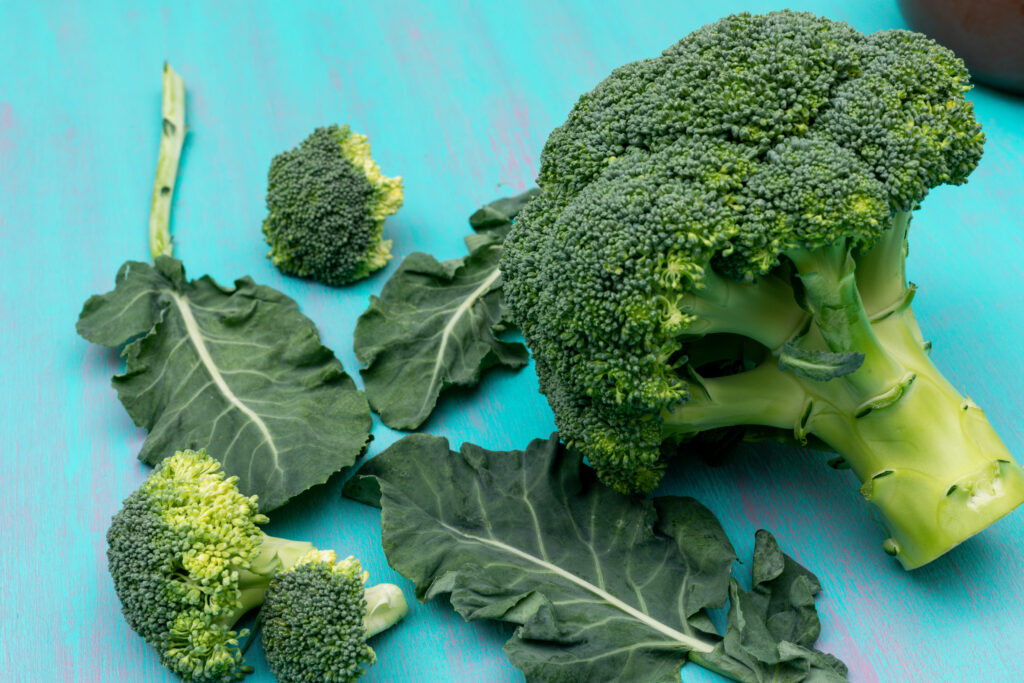
– Soil selection: Green cauliflower (broccoli) prefers light loamy soil with good drainage.
– Soil preparation: Till finely and form raised beds 25–30 cm high with bed width of 0.9–1.0 m. (For early season, shape the bed like a turtle shell to avoid waterlogging. For main season, make flat beds to improve drainage.).
– Transplanting:
+ Clear weeds and plant debris before planting..
+ Transplant in two rows per bed, preferably in the late afternoon, and water daily to maintain moisture.
+ Spacing: Rows 50–60 cm apart, plants 40 cm apart. Density: Approximately 1,600–1,800 plants per sao.
– Watering:
After transplanting, water daily to maintain soil moisture.
Once seedlings establish, water every 2–3 days, using furrow irrigation if needed. Remove excess water after sufficient moisture is achieved.
Tip: If possible, use overhead sprinklers in the evening to wash away diamondback moth eggs and larvae, reducing future infestations.
– Curd Covering (for Cauliflower):
After 45 days (early varieties) or 60–70 days (main and late varieties), when curds begin forming inside the inner leaves, immediately cover them to prevent sun damage and rain.
Initially, bend 1–2 inner leaves over the curd without detaching them.
When curds grow larger, remove outer leaves (about 1/3 of the leaf blade) to cover the curd.
Replace wilted covering leaves promptly to prevent water from entering and causing curd rot.