
Bell pepper thrives in cool, temperate climates and is typically cultivated in regions with mild weather such as Lam Dong and Da Lat. The ideal temperature range for healthy growth is 18–28°C, with daytime temperatures between 25–28°C and nighttime temperatures from 18–20°C. Bell peppers require 4–6 hours of sunlight per day. Insufficient light, especially during the flowering stage, can lead to flower drop, reduced fruit set, and lower yields. The plant grows best in well-drained, humus-rich soil with a pH level between 6.0 and 6.5.
Seedling Selection Criteria:
– Seedlings should be strong, healthy, and disease-free, with 4–6 true leaves, and balanced root-shoot development. Ideal seedlings are 40–45 days old, 12–15 cm tall, and have roots just reaching the bottom of the nursery pot.
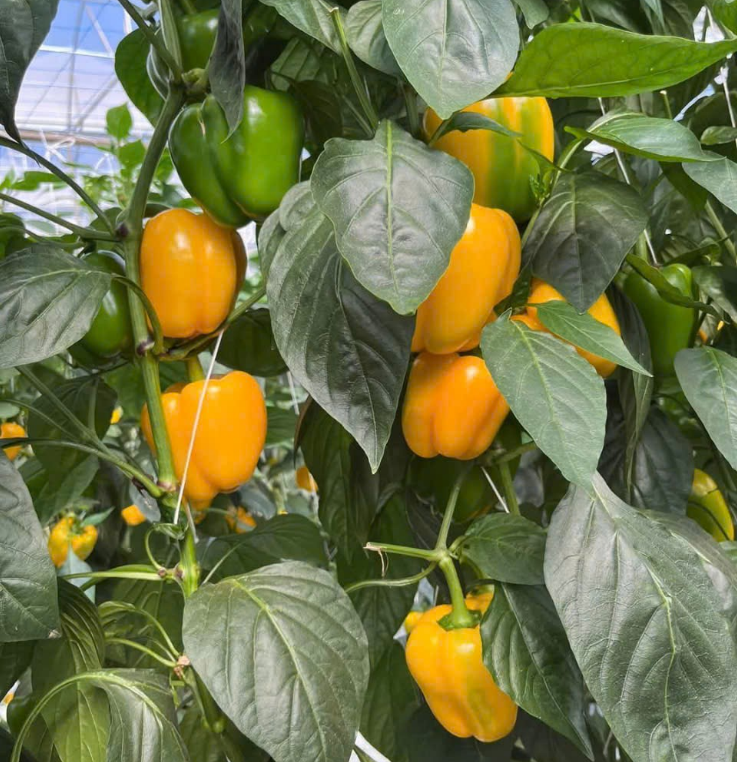
– If growing from seed, ensure that seeds are purchased from reputable suppliers, are within expiry date, and have a high germination rate. There are several bell pepper varieties, including green, red, and yellow types.
Seed Soaking & Germination:
– Soak seeds in warm water (~50°C) until they crack. After about 12 hours, sow the seeds in pre-prepared soil blocks or seedling trays, at a depth of around 5 mm.
Soil Preparation for Bell Pepper Cultivation:
Bell peppers are highly sensitive to pests and diseases, so soil must be thoroughly prepared. Remove plant debris and weeds from the field. Plow and expose the soil to sunlight to eliminate pathogens. Adjust the soil pH to between 5.5 and 7.0. Create raised beds that are 1.3–1.4 meters wide and 20–30 cm high, depending on the regional conditions.